As an Amazon Associate I earn from qualifying purchases.
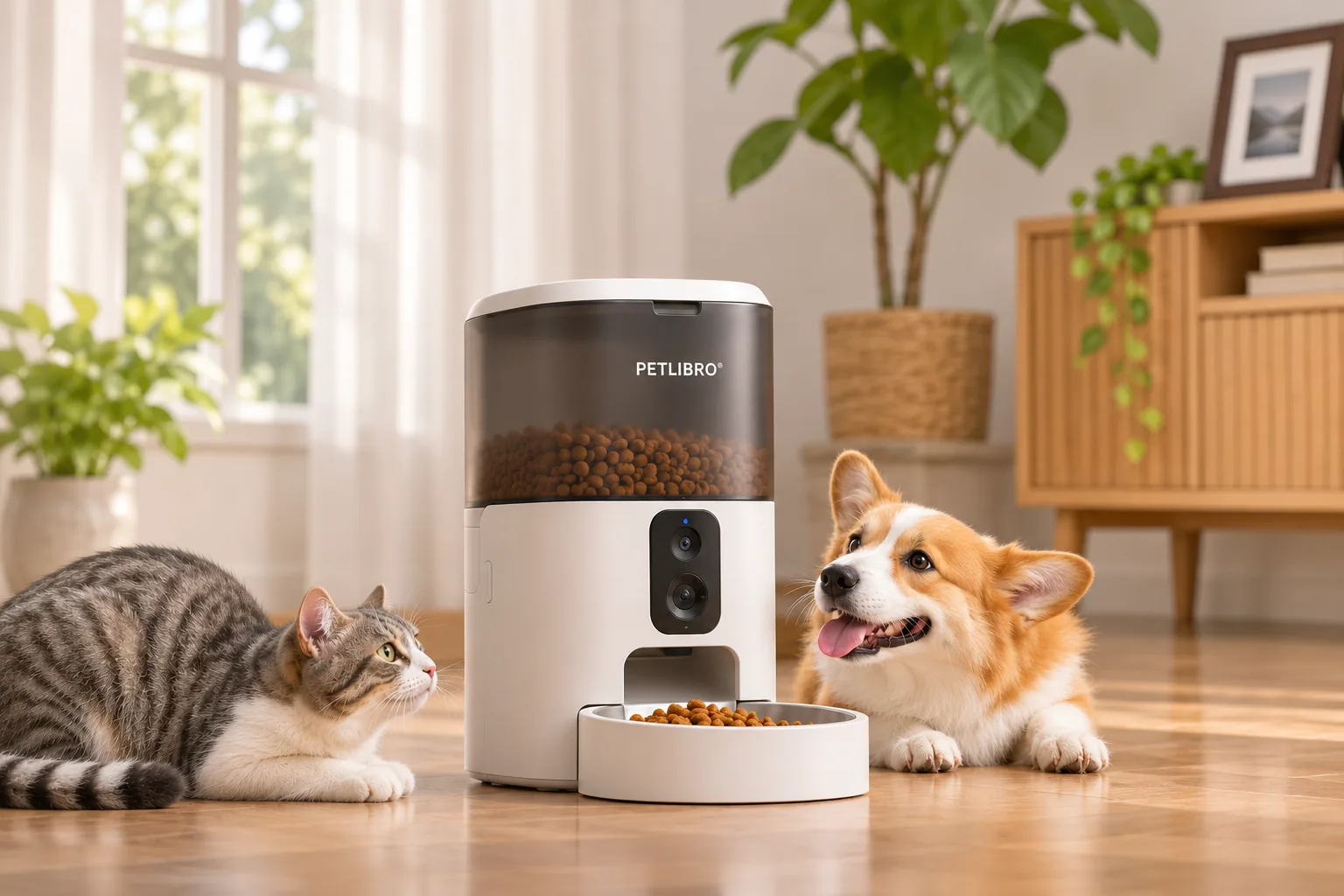
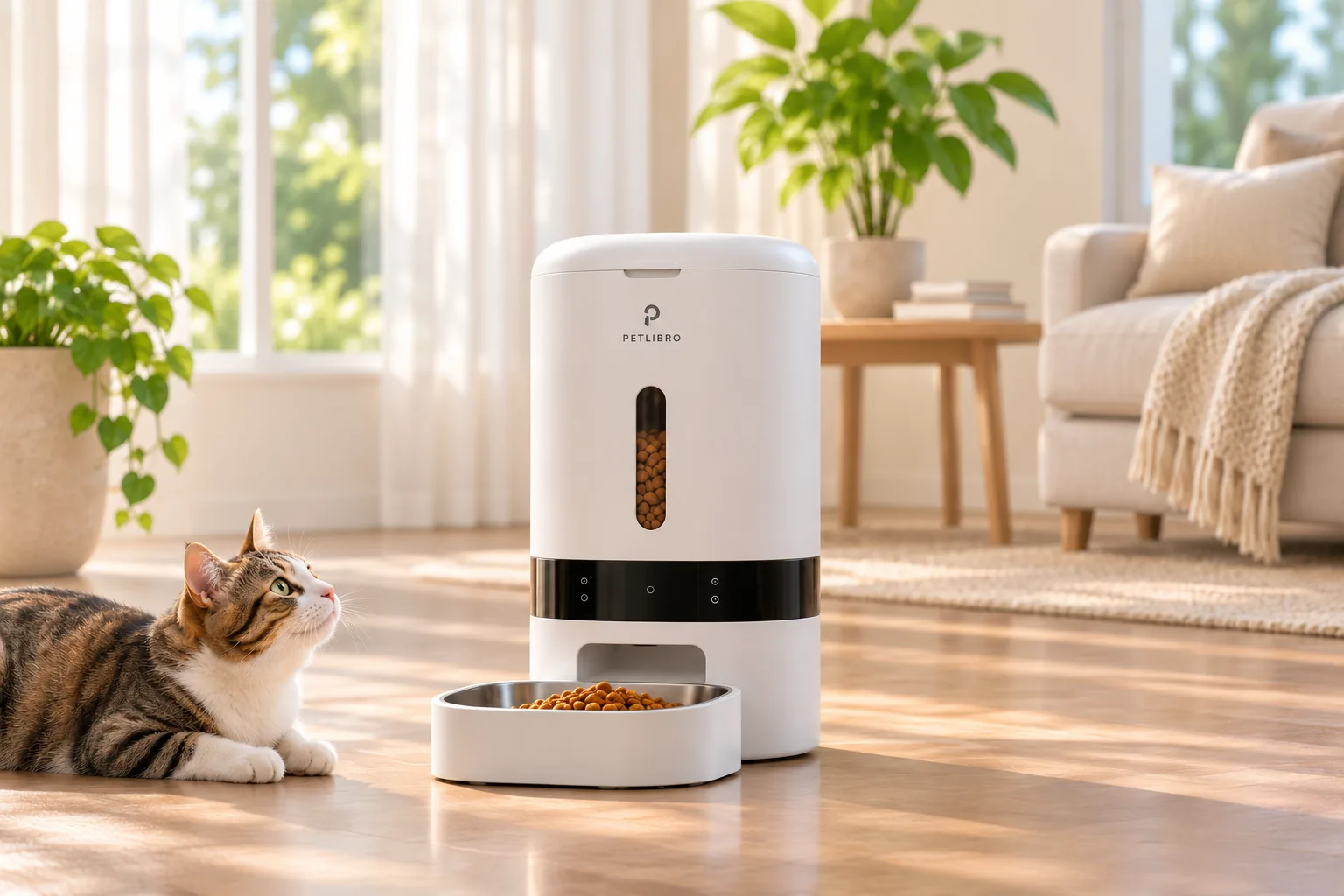
Quick answer: PETLIBRO One RFID model PLAF301 is designed to recognize its dedicated PETLIBRO collar tag, not a pet’s implanted microchip or another brand’s tag. It can help direct a tagged cat to its own food, but it is not a closed feeding enclosure: RFID opens access for the recognized tag; it does not prove another pet cannot eat after access is granted. For households that need reliable individual portions, consider whether your cats can be separated during meals. (PETLIBRO One RFID feeder; official FAQ)
Contents
- What the feeder recognizes
- PLAF301 setup and specifications
- Is it a fit for multiple cats?
- Limitations to consider
- Before you buy
What the feeder recognizes
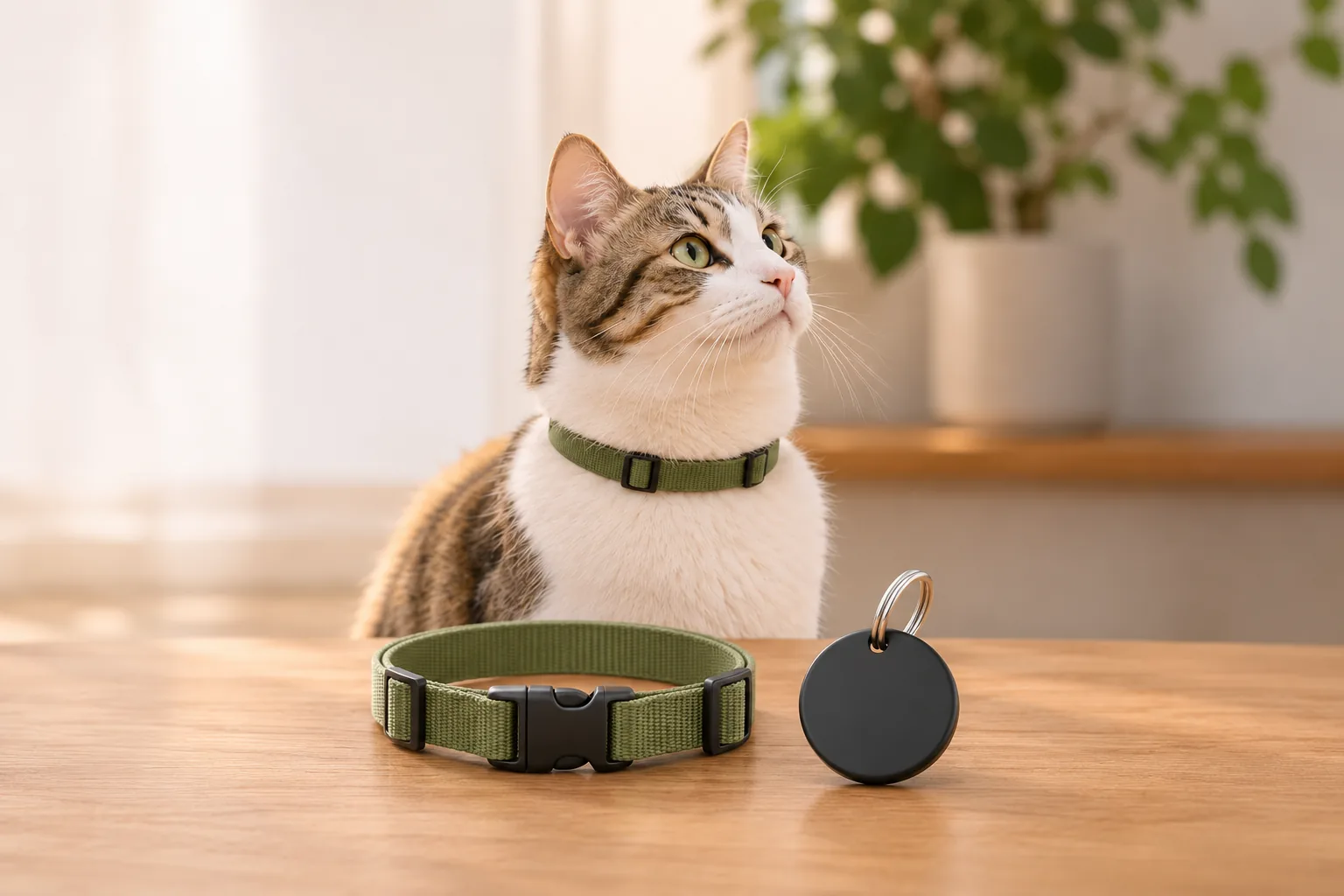
The One RFID is a collar-tag system. PETLIBRO says the feeder needs its dedicated tag and does not read microchips or other brands’ tags. The company also states one collar tag syncs with one feeder. That is a specific pairing rule; it does not mean one tag is a universal key for every feeder in a home. (PETLIBRO One RFID feeder; pre-sale FAQ)
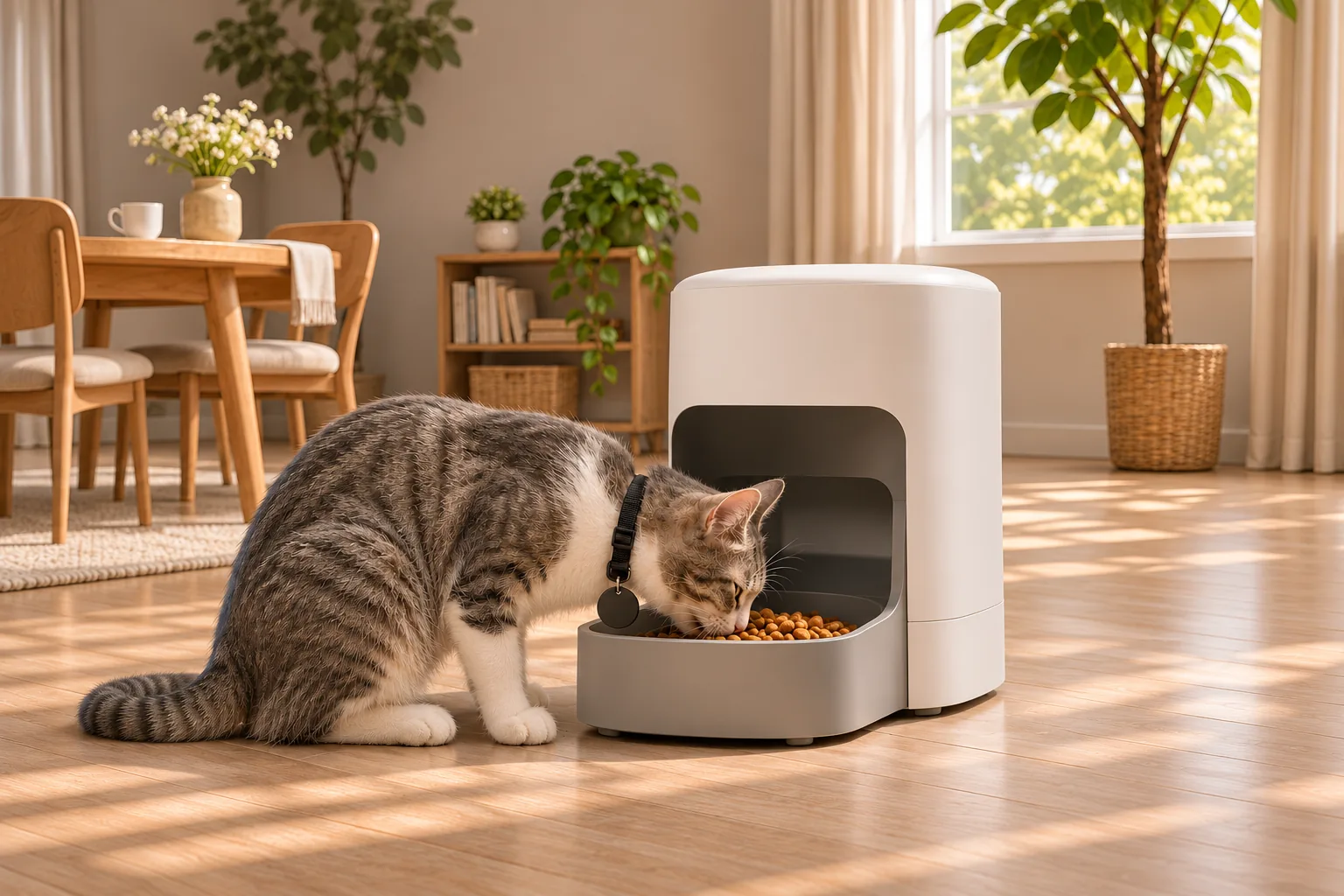
The product’s recognition mechanism matters more than the broad label “smart feeder.” The reader mat is part of the setup, and the feeder opens when it recognizes the paired tag. Think of the tag as an access trigger, not a guarantee that only one animal can consume the food once the opening is available. That last point is a practical inference from the documented opening mechanism, not a measured test of animal behavior. (PETLIBRO One RFID feeder; One RFID setup page)
PLAF301 setup and specifications
| Item | Manufacturer-published detail | Why it matters |
|---|---|---|
| Model | PLAF301 | Confirm the model code; “PETLIBRO feeder” is too broad for parts or compatibility. |
| Food | Dry food only; kibble listed at 2–15 mm | Not a wet-food feeder. Check unusual kibble shapes with the maker. |
| Hopper | 3 L | Capacity is a volume figure, not a guarantee of a particular number of days. |
| Connectivity | 2.4/5 GHz Wi-Fi listed | Useful for app setup; the dedicated tag still controls recognition. |
| Normal power | Corded | It is not intended to run as a cordless feeder. |
| Backup | Three D-cell batteries for emergency backup | PETLIBRO says schedules continue in battery-only mode, while Wi-Fi and reset are unavailable. |
The battery detail is easy to misread. PETLIBRO describes the D cells as emergency backup and says they are not recommended as the sole power source. During battery-only operation, scheduled feeding can continue, but Wi-Fi and reset are disabled. Plan for the normal corded supply if app access and network features matter to your setup. (official One RFID product details and FAQ)
For more general feeder options, browse our cat feeder guides. This PLAF301 guide does not establish compatibility with every PETLIBRO feeder or every tag sold under an RFID label.
Is it a fit for multiple cats?
It may suit a home where one cat needs a dedicated food station and the household can place and supervise feeders carefully. PETLIBRO recommends at least 10 inches between One RFID feeders and 5.9 inches between a One RFID feeder and a Dockstream fountain for optimal performance. Those are placement recommendations from the manufacturer, not guarantees that two animals will keep to separate bowls. (PETLIBRO One RFID product page)
Use this practical test before choosing it:
- Can you attach the dedicated tag comfortably and keep it in place?
- Can you leave the reader mat correctly installed and position the feeder with the recommended clearance?
- Can you prevent food sharing through room layout or supervision if another pet approaches after the feeder opens?
- Will scheduled meals work with the food type and kibble size you use?
The RFID feature helps with recognition at the feeder. It does not by itself establish portion accuracy, prevent another animal from reaching open food, or create a behavior solution. If strict separation is essential and your pets can crowd one feeding area, an access-triggered lid may not meet the whole need without a separate physical setup.
Limitations to consider
This feeder is a poor fit if you use wet food, need a microchip reader, or expect backup batteries to provide normal long-term operation. The manufacturer documents a dedicated tag requirement and says one tag syncs to one feeder, so multiple stations mean checking the pairing workflow rather than assuming a single tag can be copied across them. (official product page; official FAQ)
PETLIBRO’s separately sold RFID Collar Tag page names the One RFID Smart Feeder and Dockstream RFID Smart Fountain as compatible. That named list is the evidence available here; it should not be expanded to unrelated brands or PETLIBRO models by assumption. (PETLIBRO RFID Collar Tag listing)
Before you buy
- Look for model PLAF301 in the listing and match it against the manual/product details.
- Confirm your food is dry kibble in the published size range.
- Budget for the dedicated PETLIBRO collar tag and install the reader mat as instructed.
- Plan corded operation; treat D cells as emergency backup only.
- Measure feeder spacing and decide how you will handle food access after recognition.
You can compare it with other options on our cat feeder page. Search Amazon for PETLIBRO One RFID feeder PLAF301 — this is a search page, not a verified listing, seller, price or stock status. As an Amazon Associate I earn from qualifying purchases.
PLAF301 is a specific-tag dry-food feeder with documented setup and spacing requirements. It is most useful when the tag-recognition feature fits your routine and you can manage the physical feeding area; RFID alone is not a guarantee of exclusive access.